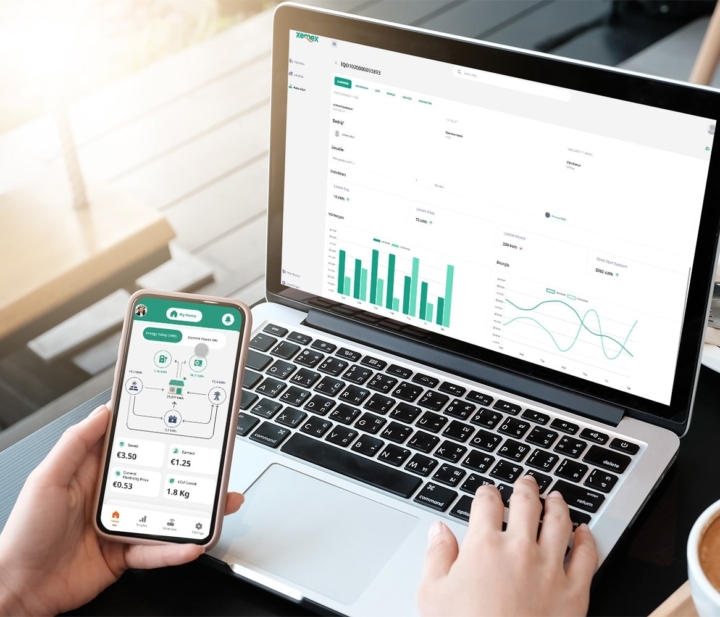
Waarom netcongestie via kleinverbruik cruciaal is.
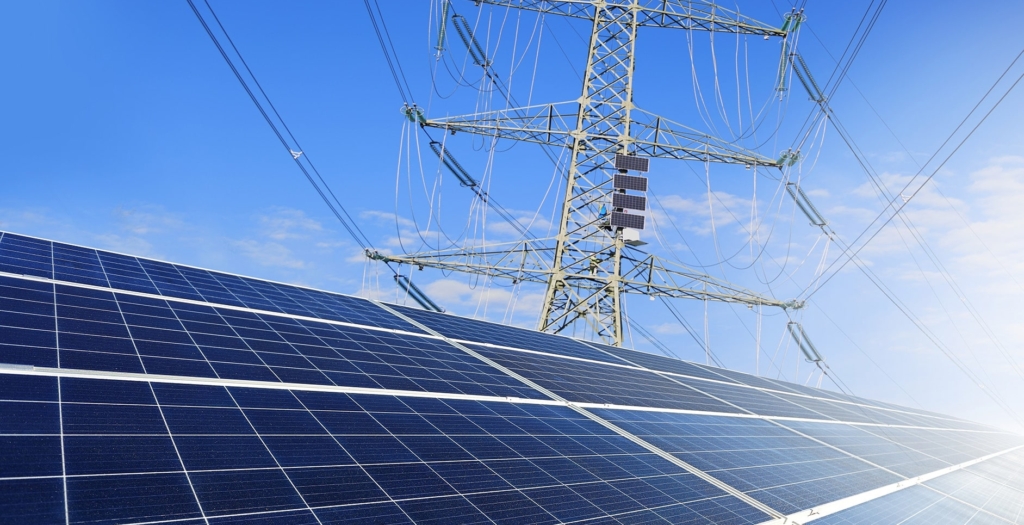
Recent analyses from the article Addressing Grid Congestion Lies with Small Consumers on Energeia show that focusing on grid reinforcement and large consumers is no longer sufficient. Costs have risen — investments in the network increased from around €2 billion in 2020 to roughly €8 billion today. Forecasts indicate further growth.
Yet much capacity remains underutilized: the real solution to grid congestion is not necessarily more cables but better organization and use of the capacity already available. Development occurs not only at an industrial scale but, surprisingly, at households and small consumers. This group offers huge potential for what can be called ‘collective smartness’.
Why the Current Approach Falls Short
Grid Reinforcement Lags Behind Growth
Grid operators focus heavily on infrastructure expansion. Yet this is insufficient to keep up with the growth of consumers and decentralized generation. New connections, electric vehicles, and heat pumps outpace cable and transformer upgrades. This creates queues, especially in new developments, and delays projects.
Flexible Contracts for Large Consumers Yield Little Result
Another approach involves contracts with large consumers for flexible consumption. In practice, many companies are hesitant. For example, a provider in a busy network area received almost no sign-ups despite hundreds of contacts. Large consumers usually do not respond to requests to increase or decrease consumption if it disrupts production. As a result, the impact remains limited; network capacity stays under pressure.
Batteries and Generators: Expensive and Rarely Cost-Effective
Some solutions involve batteries or generators. In theory, these can cover temporary peaks, but in practice, the hours are limited each year. Costs for installation, maintenance, land, and grid connection are disproportionate to the savings.
Example: a 1 MW battery that only provides backup for a few hours per year costs tens of thousands annually. For that single peak, this is economically unfavorable. Meanwhile, solutions for small consumers are already available and inexpensive.
Small Consumers: A Large but Untapped Potential
What’s Changing: Decentralized Generation and Electric Devices
More homes are equipped with solar panels. Heat pumps replace gas heating, and electric cars require charging stations. This means consumption and generation are increasingly decentralized; per street, neighborhood, or house.
This creates new patterns:
- peaks when many households charge or heat simultaneously;
- peaks in feed-in when solar panels collectively produce strongly;
- growth in demand due to new construction, EVs, or heat pumps;
- fluctuating loads per network section, time, and neighborhood.
These patterns cause local overloads — not across the entire grid, but at specific transformer stations or neighborhood cables.
Why Small Consumers Can Make a Difference
The decentralized nature of small consumers is an advantage. Individually, connections are small, but collectively, they form a large mass. If managed smartly through charging, heating, buffering, and feed-in, collective flexibility emerges.
Imagine: hundreds of households in a neighborhood charge their cars slightly later, or heat pumps operate with smart buffering. Peaks disappear without affecting comfort. This collective shift is more efficient and cheaper than expensive large-scale grid reinforcement. The potential is substantial, affordable, and largely unused.
Technology & Organizational Model: How Smart Control Can Work
Local Network Sections as Instruments
The idea is to manage the grid not nationally but per network section. Sections are parts of the low-voltage grid: e.g., a neighborhood, street, or smaller area. Load and congestion risk vary per section and time. By monitoring each section, you know exactly where and when pressure is high. If a transformer risks overload, targeted measures can slow EV charging, buffer heat pumps, or adjust solar/battery output. This approach is far more precise than generic nationwide tariffs or measures.
Smart Control Using Existing Devices
The technology already exists: smart meters, inverters, charging stations, heat pumps, boilers, batteries. All can be flexibly controlled with the right software. Coordination, data, and software are key. Devices respond to signals: grid load, feed-in times, expected peaks, price signals, or congestion alerts.
Organizationally, this works via local parties: service providers, energy cooperatives, or local aggregators. They can manage flexible supply, interact with grid operators, and reward households for participation.
The threshold for households stays low: most actions occur automatically, unnoticed by residents.
Costs vs. Benefits
Below is a simplified overview of why small-consumer flexibility is more attractive than grid reinforcement or costly batteries:
| Aspect | Grid Reinforcement / Batteries | Small-Consumer Flexibility |
|---|---|---|
| Time to Deploy | Several years (permits, construction) | Immediately deployable with existing installations |
| Costs | Very high (billions, plus maintenance and capital costs) | Relatively low — software, data, and organization are main costs |
| Flexibility | Static, infrastructure-bound | Dynamic, scalable, adjustable per connection |
| Peak Load | Not mitigated — new connections add pressure | Peak shifting and flattening possible |
| Scalability | Cumbersome: each new connection requires more capacity | Growing potential through more users, easily scalable |
Why Generic Grid Tariffs Are Not a Solution
Time-dependent tariffs — e.g., higher prices during evening peaks — miss crucial local differences. Grid load is highly local. A peak in one area may be quiet in another. A generic nationwide tariff may be unnecessarily costly or insufficiently incentivize flexible behavior. Social benefits are uncertain: homeowners and small businesses respond differently, and response is not guaranteed. Targeted control per section with real-time data is a far more robust and future-proof alternative.
Local Flexibility: How It Can Work
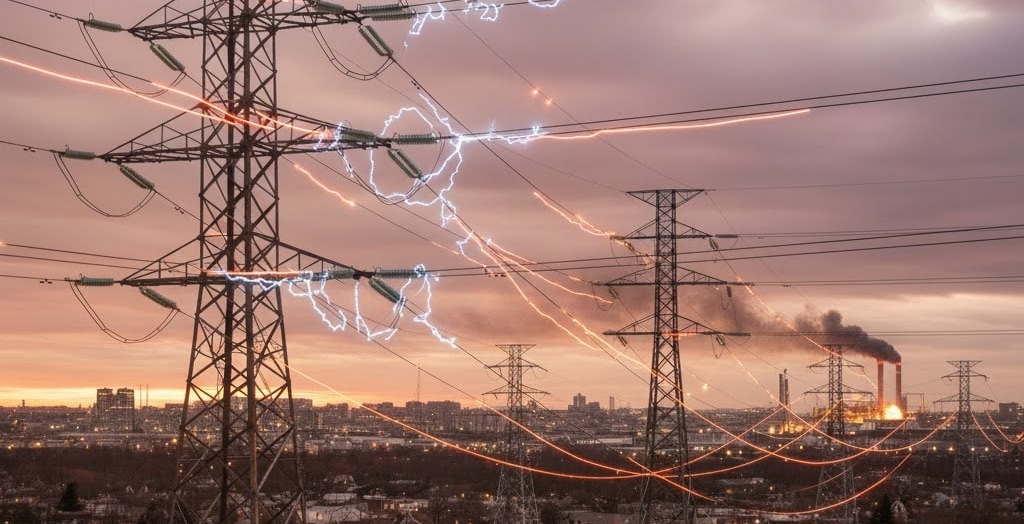
Imagine a neighborhood with thirty houses, each with solar panels, an EV charging station, and a heat pump. On a sunny evening, PV production is high. Residents plug in cars and run heat pumps. Without control, a sharp double peak occurs: in supply and demand.
With smart control, charging starts later, some devices buffer heat, solar output is staggered — a few households may temporarily adjust. Result: the transformer stays cool, the neighborhood stays within capacity, and residents notice no peak. Collective flexibility works in practice, as shown by pilots, though coordination, data insight, and cooperation are required.
Urgency is high. Grid congestion is no longer a future issue but a current one. Delays for new connections, construction setbacks, voltage issues, and investment pressures affect the system. Simultaneously, societal pressure for sustainability rises. Heat pumps, EVs, and decentralized generation are no longer experiments but reality. Local flexibility enables smart use of existing infrastructure without waiting years for upgrades.
Are We Ready for Collective Flexibility?
The transition requires a mindset shift: from “more grid = solution” to “use the grid when and as needed.” This calls for cooperation among residents, small businesses, municipalities, energy providers, and grid operators, resulting in:
- more stable grids,
- less investment pressure,
- faster new connections,
- affordable energy,
- a greener, more resilient energy system.
Technology and knowledge exist. What’s missing is the willingness to act flexibly, locally, and collectively. Each day without action increases the risk of overload, queues, and slowed energy transition. Now is the moment for the collective step.
Conclusion – A Call to Decision-Makers, Residents, and Energy Professionals
Don’t let grid reinforcement be the only solution. Include the collective power of small consumers. Promote local flexibility, establish real-time data infrastructure, test control models, and involve households and small businesses actively. This builds a greener, resilient, adaptive, and fair energy system where everyone participates.
Frequently Asked Questions about Grid Congestion and Small Consumers
Why does grid congestion often occur with small consumers?
Grid congestion occurs when electricity demand and supply together exceed the capacity of the local grid. Households and small businesses are using more and more electrical devices, such as heat pumps, charging stations, and solar panels. When many of these devices operate simultaneously, peak moments accumulate, leading to transformer overload and voltage fluctuations. Small consumers thus have a significant effect on local grid stability, while their potential for smart control remains relatively unused.
What exactly is grid congestion?
Grid congestion occurs when the electricity grid does not have enough capacity at a certain moment to handle total consumption and feed-in. You can compare it to a traffic jam: too much traffic on a narrow road. Consequences can include solar inverters shutting down, charging stations temporarily not working, or voltage problems. New connections or expansions may also experience delays in busy areas.
Why is the traditional approach insufficient?
The conventional solution from grid operators is often to reinforce or expand the network, which incurs high costs. Despite these investments, it remains difficult to fully absorb simultaneous peaks from decentralized generation, such as solar panels and charging stations. Experts therefore advocate an alternative approach: using existing grid capacity more efficiently by controlling consumption and feed-in smartly, with small consumers playing a key role.
How can an EMS reduce grid congestion?
An Energy Management System (EMS) can spread electricity usage to times when the grid is less loaded. The system can automatically switch devices such as charging stations, heat pumps, or boilers on or off depending on real-time grid load. This reduces peak moments and stabilizes the local energy network, while solar feed-in is efficiently managed without overloading.
How does smart control for small consumers work?
Smart control works at the neighborhood or district level, monitoring local grid load at that moment. Local parties, such as energy cooperatives or suppliers, can temporarily switch off devices or shift consumption to prevent overload. For the user, comfort changes very little; for example, an electric car charges automatically when capacity is available. This optimally uses existing grid capacity and is a cheaper alternative than expensive grid reinforcement or large-scale batteries.
What role can households play in relieving grid congestion?
Households can better spread their energy consumption using smart devices and EMS technology. Small adjustments, such as rescheduling EV charging or the boiler operation, can already make a significant local difference. In this way, households actively contribute to a more stable energy network while often saving on energy costs.
What benefits does demand response offer to consumers?
Demand response allows consumers to participate in relieving the grid and receive compensation for it. Consumption is automatically adjusted during peak moments without affecting comfort. This not only contributes to a stable grid but also offers financial benefits and promotes sustainable energy usage.
What will future grids look like for small consumers?
In the future, the grid will increasingly rely on smart control and decentralized flexibility. Small consumers will actively become part of the energy network. This reduces the need for costly grid reinforcement, makes the system more sustainable, and ensures affordable energy for everyone.
What impact does solar feed-in have on the local grid?
During the day, solar panels often feed more energy into the grid than it can handle, especially when many households feed in simultaneously. Without smart control, this can lead to voltage problems or temporary inverter shutdowns. By linking feed-in to an EMS, peak moments can be spread, keeping the grid stable and energy optimally used.
How can a small business help reduce grid congestion?
Small businesses can schedule energy-intensive processes for times when the grid is less loaded. Devices such as industrial boilers or EV charging stations can be automatically controlled via an EMS. In this way, small commercial consumers also contribute to grid stability and can reduce peak loads without hindering production.
What are the financial benefits of smart energy management for small consumers?
By smartly controlling energy consumption and feed-in, households and small businesses can avoid peak hours and reduce energy costs. At the same time, they can benefit from compensation for demand response or flexible grid services. This makes smart energy solutions financially attractive while helping maintain a stable grid.
Always ready to start
Wondering what we can do for your organization? Contact Xemex and discuss your needs with our team. Together we will realize a solution that addresses your energy challenges and opens up new possibilities.
Burgemeester Burgerslaan 40
5245 NH 's-Hertogenbosch, The Netherlands
Metropoolstraat 11a
2900 Schoten; Belgium