Hydrogen as a Key Link in the New Energy System
From electrons to molecules
To understand why hydrogen is gaining importance, it is necessary to look at how the energy system itself is changing. The energy transition has broken open the old model in which large centralized power plants continuously supplied electricity. That system has been replaced by a more dynamic structure based on solar and wind energy. According to insights from the International Energy Agency, the global energy challenge is shifting from production to flexibility. Energy is increasingly available, but not always at the right moment.
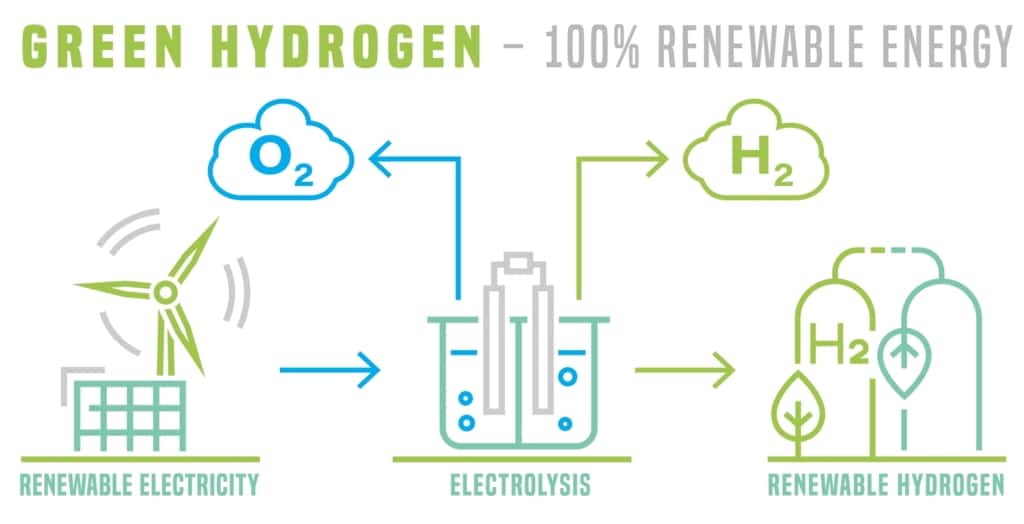
This is where hydrogen enters the picture. When there is excess electricity, for example during sunny midday hours, that power can be converted into hydrogen through electrolysis. The hydrogen can then be stored and used later in industry, transport, or electricity generation when demand increases.
In this way, the energy system is evolving from a purely electrical network into a hybrid system where molecular storage plays a growing role.
The sun that produces too much
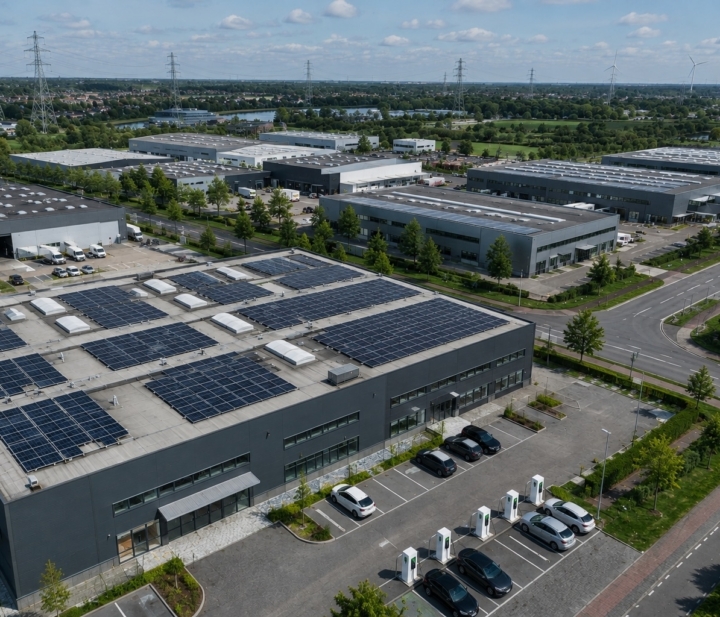
Solar energy is one of the main drivers of the energy transition. In the Netherlands, installed capacity continues to grow rapidly, both on rooftops and in large-scale solar parks. However, this growth reveals a structural imbalance. Solar production peaks at times when demand is relatively low. During midday, households consume less electricity and many businesses operate at reduced load. As a result, the grid experiences periods of oversupply.
In theory, this surplus energy should be stored. In practice, that is not simple. Batteries offer a solution, but only for short durations. Once they are full, the system reaches its limit. When imbalances last longer than a few hours or even extend across seasons, the challenge becomes significantly larger.
Hydrogen provides an alternative route. Instead of wasting surplus electricity or curtailing production, energy can be converted into a gas and stored at scale. This creates a buffer far beyond what batteries alone can provide.
Batteries and hydrogen: not competitors but partners
In many discussions, batteries and hydrogen are presented as competing technologies. In reality, they serve different functions within the energy system. Batteries respond quickly. They stabilize the grid within seconds and are ideal for short-term balancing of supply and demand. Hydrogen operates on a different timescale. It is slower, but capable of storing much larger amounts of energy over longer periods. The difference is not only technical but functional. Batteries manage short-term fluctuations, while hydrogen handles long-term energy shifts, from days to seasons.
Research from TNO highlights that the combination of both technologies is essential for a fully resilient renewable energy system. No single solution can address all challenges alone.
Electric mobility and additional pressure on the grid
The rise of electric mobility adds another layer of complexity. Charging stations are being deployed rapidly in residential areas, logistics hubs and commercial locations. They draw significant power, often at the same time as other peak loads. While batteries and EMS help manage these peaks, hydrogen can play a complementary role in reducing pressure on the grid. Instead of relying entirely on electricity for all transport segments, part of heavy mobility could shift toward hydrogen-based solutions.
This is particularly relevant for heavy-duty transport and logistics, where fast refueling and long range are critical.
Industry as the anchor for hydrogen demand
The strongest structural demand for hydrogen today does not come from households or mobility, but from industry. Refineries, chemical production and steel manufacturing have relied on hydrogen for decades. The key difference now is the shift toward green hydrogen, produced via electrolysis using renewable electricity. This connects solar and wind generation directly with industrial demand.
European policy, led by the European Commission, focuses strongly on industrial clusters and hydrogen hubs where production, storage and consumption are integrated within the same ecosystem.
Grid operators and the reality of congestion
Grid operators across the Netherlands are under increasing pressure. The infrastructure was not designed for today’s decentralized and fluctuating energy flows. According to Netbeheer Nederland, congestion is expected to increase further in the coming years due to rapid electrification of transport, heating and industry.
Hydrogen can help relieve this pressure, not by replacing the electricity grid, but by reducing peak loads in specific locations. Local energy hubs combining solar generation, battery storage and hydrogen production can reduce dependence on central grid expansion.
The critical perspective remains
Despite growing interest, hydrogen remains a debated technology. The main concern is efficiency. Each conversion step, from electricity to hydrogen and back, results in energy losses. This criticism is valid and widely acknowledged in scientific and policy discussions. Hydrogen is therefore not a universal solution, but a targeted tool within a broader system.
Its value lies not in efficiency per unit of energy, but in system flexibility. It allows excess renewable energy to be captured and stored, and it provides stability when direct electrification is not sufficient.
An energy system that behaves like an ecosystem
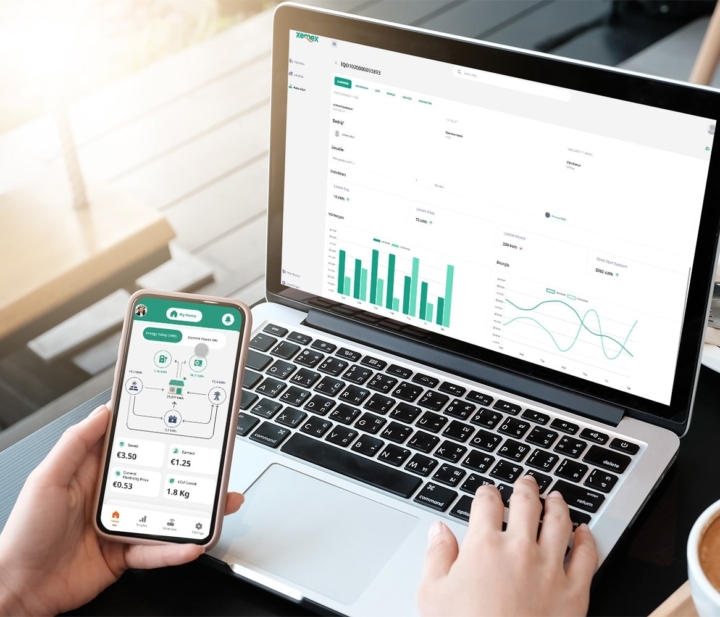
What begins as a technical discussion gradually evolves into a systems story. Solar panels generate electricity when the sun shines. Batteries smooth short-term fluctuations. EMS platforms coordinate the entire system. Hydrogen fills the gaps when no other option remains.
The energy system increasingly resembles an ecosystem, where different technologies interact and balance each other rather than operate independently.
Conclusion: hydrogen as a silent stabilizer
Hydrogen is unlikely to become the dominant energy source of the energy transition. Its role is more subtle but essential. It acts as a connecting layer between surplus and shortage, between electricity and molecules, between solar energy and industrial demand.
In a system under pressure from electrification, decentralization and grid congestion, hydrogen provides something often underestimated: time. It shifts energy from one moment to another, independent of immediate grid availability.
In that sense, hydrogen is not replacing the energy system. It is quietly holding it together.
Bronnen
- International Energy Agency – Global Hydrogen Review
https://www.iea.org/reports/global-hydrogen-review-2023 - European Commission – Hydrogen strategy
https://energy.ec.europa.eu/topics/energy-systems-integration/hydrogen_en - TNO – Waterstof en energietransitie
https://www.tno.nl - Netbeheer Nederland – Netcongestie en energietransitie
https://www.netbeheernederland.nl - Rijksoverheid – Waterstofbeleid Nederland
https://www.rijksoverheid.nl
Always ready to start
Wondering what we can do for your organization? Contact Xemex and discuss your needs with our team. Together we will realize a solution that addresses your energy challenges and opens up new possibilities.
Burgemeester Burgerslaan 40
5245 NH 's-Hertogenbosch, The Netherlands
Metropoolstraat 11a
2900 Schoten; Belgium