Net metering ends in 2027: what does that mean for home batteries?
In practice, consumers experience this as a significant loss of benefit. Under the old scheme, you got the full rate back for every kWh fed back through net metering. After 2027, you’ll get at most 50% of that paid out, and sometimes you may even be left with a bill if feed-in costs are high. This means solar panels take longer to pay for themselves in the “free” sense. Many people are therefore concerned that a surplus of solar power after 2027 will end up costing them money. A popular idea, as a result, is to invest in a home battery so that more of your own electricity is used directly instead of being fed back.
What will consumers notice about the new rules?
- No more net metering: Until the end of 2026, feed-in was offset against consumption; from 2027 onward, you no longer gain a tax advantage this way. You simply pay energy tax and VAT on every kWh you consume, including energy that would previously have been netted out.
- Feed-in compensation: For every kWh you do feed back, you’ll still receive compensation. By law, this must be at least half of your own electricity rate. In practice, the compensation varies by contract and supplier. With a fixed contract, the supplier cannot simply adjust the compensation.
- Feed-in costs remain: After 2027, energy suppliers may still charge costs for every kWh you feed back. These feed-in costs are often a fixed amount or a small surcharge per kWh. The ACM ensures such costs don’t become excessive. Many suppliers say they will actually lower these costs after 2027, but they won’t be scrapped entirely (the Consumers’ Association Consumentenbond expects some reduction, though the extent is unknown).
- Focus on self-consumption: Because you’ll receive less for electricity fed back to the grid, it becomes increasingly attractive to use generated electricity directly yourself. Running appliances while the sun is shining pays off more, since that kWh is otherwise consumed tax-free rather than sold at roughly 50% of its value.
In short: from 2027 you will no longer see “negative” electricity costs on your annual statement if you generate more than you consume — you’ll receive at most a modest compensation. The fixed grid fee (vastrecht) and your energy tax reduction will still apply. According to Milieu Centraal and research by the Vereniging Eigen Huis (Dutch homeowners’ association), solar panels may sometimes take longer to pay back, but remain financially worthwhile in the long run. The exact impact depends on your electricity price, the number of panels, and how much you consume yourself.
Home battery: high costs, long payback period
Interest in home batteries is growing now that net metering is disappearing. After all, a battery can store surplus solar power for later use, meaning you feed back less and consume more directly. Experts warn, however, that the numbers don’t add up quickly. A home battery is expensive: a complete system (including inverter and installation) currently costs roughly €4,500–€12,000, depending on capacity and brand. Battery capacity typically ranges from 4 to 20 kWh, with larger batteries also requiring higher installation costs.
Because of this high price, the payback period is often long. Milieu Centraal states that a battery is “so expensive that you most likely won’t earn it back” through savings on your electricity bill. The Vereniging Eigen Huis also warns that research shows a real chance you won’t recoup the investment within the system’s lifespan, even with net metering disappearing. This depends partly on your consumption pattern, electricity rates, and the costs of power and storage. Rabobank likewise emphasizes that payback periods are uncertain, and that suppliers’ promises (often 3–7 years) frequently prove too optimistic.
One practical calculation example (from HIER) illustrates this: suppose a household consumes 3,000 kWh per year with 10 solar panels generating 3,500 kWh, of which 1,000 kWh is used directly. With a 5 kWh battery, this direct consumption could theoretically rise to nearly 2,000 kWh. At an electricity price of roughly 25 cents, that yields about €200–€250 extra per year. For a €3,000 battery, that means a payback period of over 12 years — without even accounting for the cost of capital.
In short: a home battery can increase your self-consumption, but the investment is high. Studies conclude that it often doesn’t pay off, unless you can store a very large share of your own electricity and replace (significantly) expensive grid power. Consider other savings measures first (insulation, smart appliances, etc.).
Different situations: families vs. retirees
Who benefits most — or least — from a battery? An important factor is when you’re home and using electricity.
- Working families: A family whose adults work during the day typically has low consumption during sunlight hours. This means much of the solar power gets fed back to the grid during the day. Without a battery, such a household only receives the limited feed-in compensation for that electricity (and may pay costs on top). In this situation, a battery can, in theory, offer added value by storing that surplus for the evening. But consider: you can also adjust your usage. For example, run your washing machine during the day or charge your EV in the afternoon while the sun is shining. The Consumentenbond stresses that you can run appliances while the sun is out (e.g. EV charging, laundry), reducing how much you need to feed back. Without an EV or heat pump, you otherwise use little electricity during the day and draw a lot from the grid in the evening — paying the full rate for it. A battery can shift that consumption, but the gain (comparable to the ~€200–€300 per year in the earlier example) remains limited relative to the purchase price.
- With an electric vehicle or heat pump: Do you also have an EV or heat pump alongside your solar panels? Then your daytime consumption is often higher. An EV can be set to charge smartly whenever there’s a lot of solar power. Milieu Centraal points out that an electric car’s battery averages around 60 kWh — enormous compared to a home battery of 2–20 kWh — and that smart charging can raise self-consumption from around 30% to over 50%. The car effectively acts as a mobile battery. For a fixed home battery, this means it can deliver more return (especially with many appliances), but the calculation becomes complex. HIER notes that a home battery can become more attractive especially if you switch to electric driving or install a heat pump, though it depends on how much you use throughout the day and how everything is configured. In practice, it’s often more practical to have the heat pump heat water in the afternoon during summer, or charge your EV only when the sun is out (via a smart charger), so you benefit from your solar panels without an extra investment.
- Retirees: Older people are often home a lot during the day and already use more solar energy directly. Anyone over 70 who doesn’t plan to acquire major power-hungry appliances (EV, air conditioning, electric cooktop) will generally have little surplus. That means you have little kWh left to feed back for compensation. A home battery adds little extra self-consumption in such cases. Moreover, because the investment is so high, it often takes 10–12 years or longer to pay back, which is difficult to justify for someone over 70. In that situation, it’s wiser to use your appliances during sunny hours as much as possible now. Run the washing machine or dishwasher during the day, turn on the heating (or boiler) slightly earlier during sun hours, and charge the EV in the middle of the day. That way you get free, self-generated electricity without a batte
When a home battery can be worthwhile
A home battery isn’t a good choice for everyone. Generally speaking: the more solar power you would otherwise feed back, the greater the potential gain. Practical advice:
- Analyze your consumption and generation. Look at how you used and fed back energy over the past year. Request an overview from your grid operator or energy supplier, or use a monitoring app for your solar panels. This shows whether you lose a lot of electricity during the day. If you feed back little net electricity annually (because you use most of it yourself), you’ll benefit less from a battery. If you feed back a large amount, a battery can shift relatively more kWh toward self-consumption.
- Take advantage of smart appliances. Turn on heavy consumers while the sun is shining. Think of the washing machine, dryer, and dishwasher, the electric water boiler, or charge your electric car in the afternoon (via smart charging). This way you use more of your own solar power and pay less for grid electricity. Milieu Centraal and the Consumentenbond both give explicit advice on this: use the solar power on the spot, so you don’t have to sell it back to the grid.
- Dynamic contract and EV as a battery. If you have a dynamic rate and/or an EV, a battery can also work in your favor with price differences. Rabobank mentions the strategy of a “trading battery” (buying electricity when prices are low and selling when they’re high), but warns that the profit is uncertain. For many people, it’s more practical to simply use a smart charging station. For EV owners, the average EV battery is often effectively the “home battery” that delivers the most self-consumption.
- Check the payback period. Use calculation tools (such as those on the Milieu Centraal or Energievergelijker websites) to make an estimate. Try the Storage Check from the Vereniging Eigen Huis or the calculation examples from HIER to see whether it can be made profitable for you. Realistically, the payback period is around 10 years or more. Ask yourself whether you want to make that investment for the resulting benefit on your energy bill. Note that there are (currently) no national subsidies for home batteries; only occasional local initiatives exist.
Practical example: Suppose a family consumes 3,000 kWh per year and has 10 solar panels (3,500 kWh generation). They currently use 1,000 kWh directly and feed back 2,500 kWh. With a 6 kWh battery, that direct use could theoretically grow to around 2,000 kWh. At an electricity price of roughly 25 cents, that yields about €200–€250 extra per year. For a battery costing around €3,000, that’s a payback period of around 12 years. Without a battery, you would still receive compensation for that 1,500 kWh (e.g. 50% of the rate), but you’d pay for every kWh you would otherwise have drawn from the grid. Such a battery therefore mainly helps cover evening consumption, but represents a substantial investment.
Measure first, then invest
The abolition of the net metering scheme doesn’t automatically mean that a home battery is the best solution for every solar panel owner. Anyone looking to limit their energy costs would do well to first examine their own energy profile: how much electricity do the solar panels generate, how much of that is used directly, and how much is fed back to the grid? This information makes clear where the biggest opportunities lie. Sometimes that’s a home battery, but often the solution starts more simply: using as many electrical appliances as possible at times when the solar panels are producing power. Think of running the washing machine and dishwasher during the day, or smart-charging an electric car. Households that are home a lot during the day in particular can already make good use of a large share of their solar power this way.
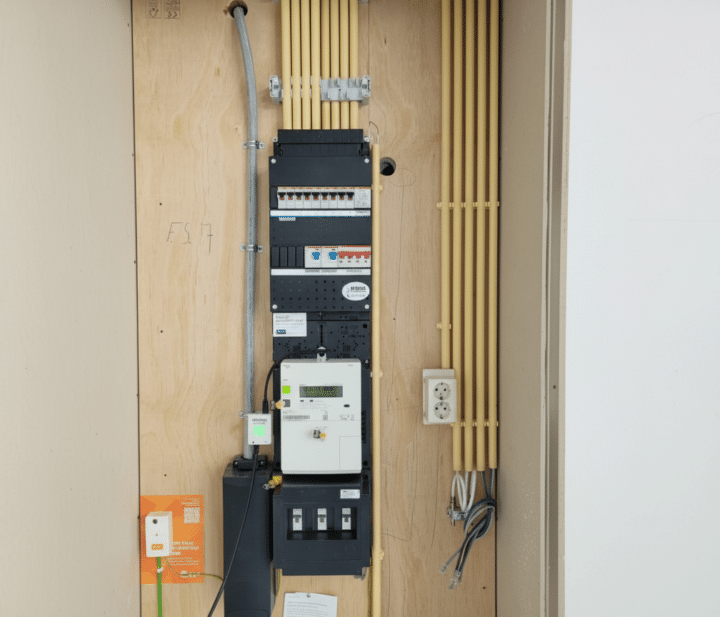
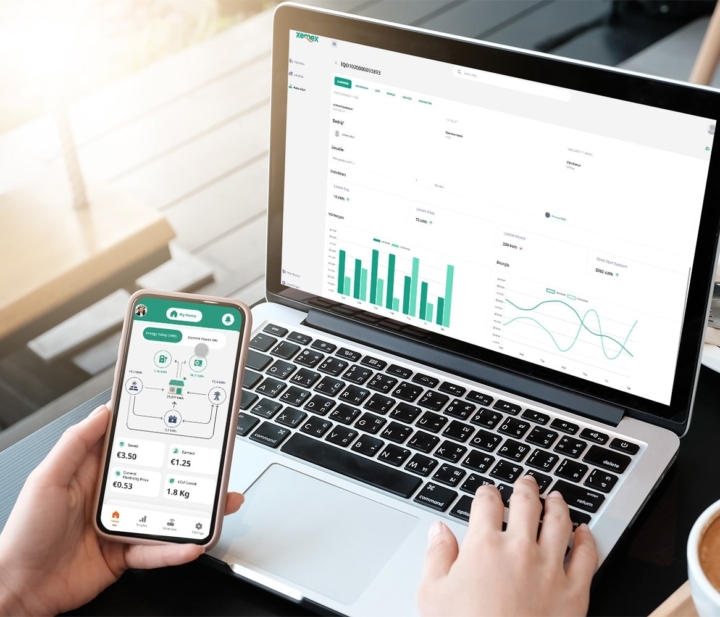
Smart metering forms the foundation for this. With smart meters and energy monitoring from Xemex, it becomes clear how much energy a home generates, consumes, and feeds back. This allows households to see not just that they’re feeding back electricity, but also when and how much. That insight helps align energy consumption more closely with self-generation, reducing unnecessary feed-in and feed-in costs. And only once the measurement data shows that there is structurally a large surplus of solar power that can’t be used directly, does it make sense to investigate whether a home battery is financially worthwhile.
Not storing as much energy as possible, but using as much energy as smartly as possible: that will become the key to a lower energy bill after 2027.
sources:
Want to know more? Ask us!
Do you have a question about our products or solutions? Then please contact us. Together we will look for the best solution for your energy problem.
Burgemeester Burgerslaan 40
5245 NH 's-Hertogenbosch, The Netherlands
Metropoolstraat 11a
2900 Schoten; Belgium