Energy Costs are expected to rise by around 20% in 2027
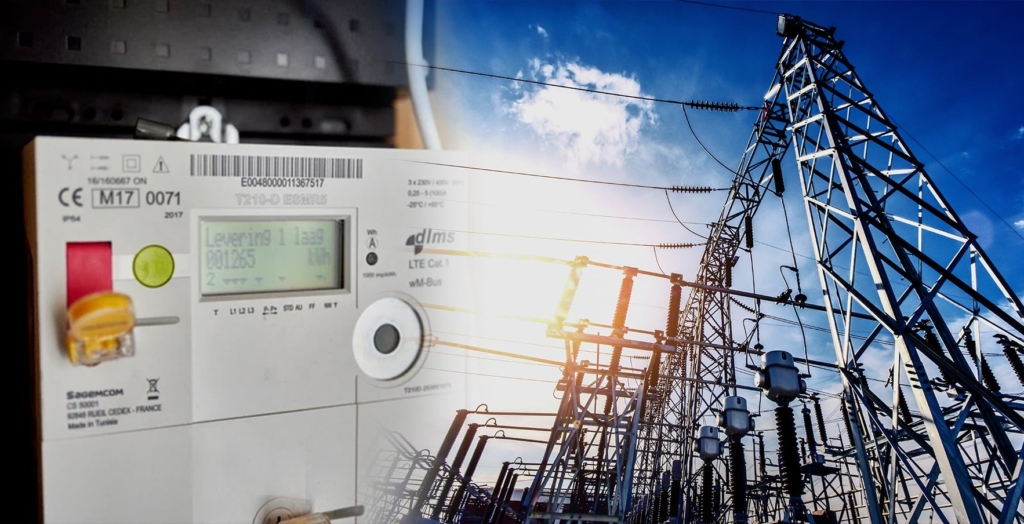
The increase is not solely driven by the price of energy itself. Network operators are investing heavily in new cables, substations and connections. These investments are necessary to connect homes, businesses and renewable energy installations to the electricity grid. The growing demand for electricity from heat pumps, electric vehicles and other electrical applications is also increasing the pressure on the grid.
For households and businesses, this means that the energy bill consists of more than just the price per kilowatt-hour or cubic metre of gas. The cost of using the energy infrastructure is also becoming increasingly important.
Why sustainability remains an attractive option
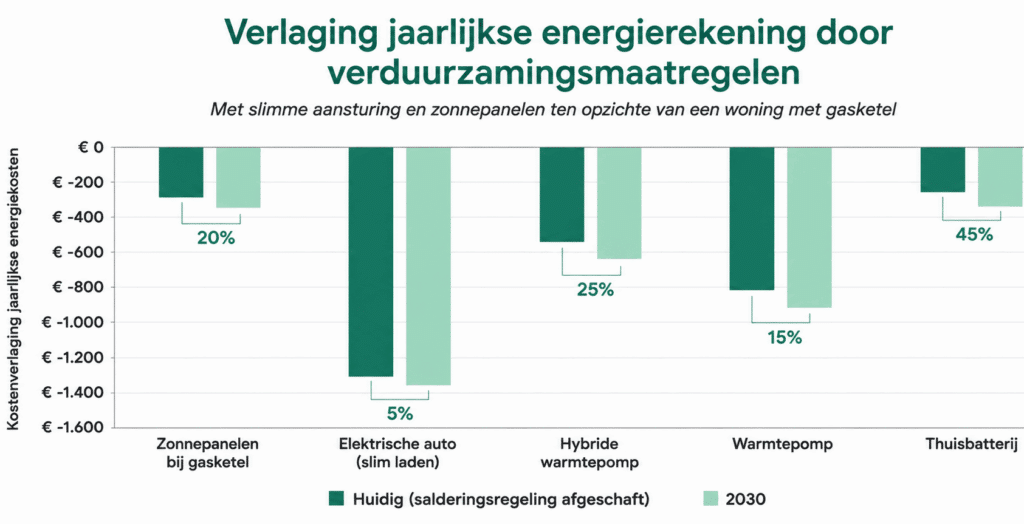
At first glance, higher network tariffs may seem like bad news for those who have already invested in solar panels, a heat pump or a home battery. However, the picture is more nuanced. Research institute CE Delft examined how energy costs could develop towards 2030. The conclusion is that sustainable solutions remain financially attractive, partly because the costs of fossil energy are expected to come under further pressure due to higher levies and changing regulations.
This does not mean that every investment is automatically profitable. The outcome depends on energy consumption, the building or installation, energy prices and when electricity is used. However, households and businesses that reduce their dependence on gas and use electricity more intelligently have more opportunities to manage their energy bills.
Heat pumps: higher costs, but still an advantage
Recent reporting by NOS indicates that average energy bills could rise by around 10% over the next five years. Households with a heat pump are expected to experience a relatively strong increase, partly due to higher network tariffs and the abolition of the net metering scheme for solar panels. Nevertheless, fully electric heat pumps remain financially attractive in the scenarios examined. Households that use electricity for heating are expected to spend around €1,200 per year on energy costs in 2031. Households with a gas boiler are expected to pay considerably more.
This distinction is important: a rising energy bill does not automatically mean that investing in sustainability was the wrong decision. The relevant question is how much a household or business pays compared with the alternatives.
A heat pump uses electricity, but it can significantly reduce or even eliminate gas consumption. This shifts energy use from a fossil fuel to electricity. How beneficial this is depends partly on the efficiency of the installation and the time at which electricity is consumed.
Solar panels: self-generated energy becomes more valuable
The financial calculation for solar panels is also changing. From 1 January 2027, the Dutch net metering scheme will be abolished. Electricity fed back into the grid can no longer be offset against consumption in the same way.
As a result, it becomes more important to use the solar energy you generate yourself. A household that generates a lot of electricity during the day but mainly consumes energy in the evening may feed a larger share of its production back into the grid at a lower compensation rate. This makes energy management more interesting. For example, electric vehicles can be charged when solar panels are generating electricity. A home battery can also help store energy for later use.
However, a home battery is not a universal solution. Its financial feasibility depends on purchase costs, capacity, lifespan, energy prices and actual usage. It is therefore sensible to first examine how much energy you generate, how much you use directly and how much you feed back into the grid.
Smart energy use: from saving to managing consumption
Saving energy remains important, but the next step is to manage when energy is used more intelligently. This is becoming increasingly relevant as network tariffs may become partly dependent on the time of day when electricity is consumed. CE Delft has considered time-dependent network tariffs in its scenarios. It may become more advantageous to move energy-intensive activities outside peak hours.
For households, this could mean:
- Charging an electric vehicle when sufficient solar energy is available.
- Coordinating a heat pump with the building’s insulation and heating requirements.
- Using a home battery to increase self-consumption of solar energy.
- Monitoring energy consumption and identifying unusual patterns in time.
Businesses can benefit from this approach as well. Examples include spreading charging processes, scheduling energy-intensive activities or preventing unnecessary peaks in consumption.
The goal is not to constantly think about energy. It is to use insight and automation to make the right choices at the right time.
What does this mean for businesses?
The developments may be even more significant for businesses. They face not only higher network charges, but also growing electricity demand due to the electrification of business processes, charging infrastructure and sustainable installations.At the same time, businesses cannot always simply request more capacity. In many locations, the electricity grid is already heavily congested. A larger connection is therefore not automatically available.
This makes efficient energy use a practical challenge. How much capacity is actually needed? When do the highest peaks occur? Which installations can spread their consumption? And where are there opportunities to use self-generated solar energy more effectively?
A clear overview of energy flows is an important first step. Energy monitoring enables businesses to track consumption, generation and feed-in. This creates a sound basis for investments in solar panels, charging infrastructure, batteries or an energy management system.
Measure first, then improve
The energy transition requires investment. But not every home or business installation has the same needs. That is why an effective approach starts with insight. By collecting and analysing energy data, it becomes clear where consumption occurs and when the largest peaks arise. It can also reveal whether solar panels are generating sufficient self-consumption and whether a heat pump or charging station is being used efficiently.
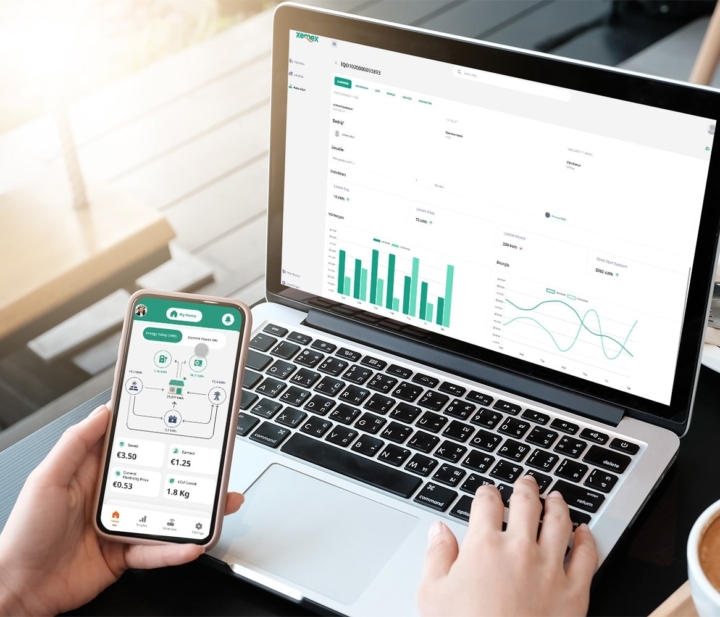
Xemex offers energy monitoring and energy insight solutions through Enny Insight. Using smart metering equipment and an accessible dashboard, users can monitor their energy consumption, generation and feed-in. This helps identify unusual patterns and discover opportunities for savings.
For those looking to go beyond monitoring, additional options are available within the Enny Energy Management System. Depending on the installation and selected solution, energy management can be expanded with functions for proactive management, optimisation and smart control.
Technology is not the goal in itself. What matters is the information and decisions that help make energy use more efficient, affordable and future-proof.
Tomorrow’s energy bill starts today
Rising network tariffs show that energy is not just a matter of consumption and energy prices. The way we generate, distribute and use energy increasingly determines what households and businesses pay. Sustainability therefore remains an important step. But its benefits become greater when installations work well together and energy is used intelligently.
Those who gain insight into their energy consumption today can make more targeted investments, prevent unnecessary peaks and get more out of the energy already available. This makes the energy transition not only a technical challenge, but also an opportunity to organise energy use more intelligently and efficiently.
Sources
-
Dutch Authority for Consumers and Markets (ACM) – Expected network tariffs for 2027
-
NOS – Energy Costs to rise in the coming years, particularly for households with heat pumps
-
Change Inc. – Rising energy costs make sustainability investments more attractive
-
Netbeheer Nederland – Developments and investments in the Dutch energy grid
Frequently Asked Questions About Rising Energy Costs
Why are energy costs rising in 2027?
Network tariffs for gas and electricity are expected to increase by an average of around 20%. This is mainly due to high investments
in the electricity and gas grids. The exact increase varies depending on the network operator and connection type.
Will a heat pump become less attractive because of higher energy costs?
Not necessarily. Although households with a heat pump may experience relatively strong cost increases, the scenarios examined indicate that they will still be cheaper on average than households thatcontinue to rely entirely on a gas boiler.
What changes when the net metering scheme ends?
From 1 January 2027, households will no longer be able to offsetelectricity fed back into the grid against their own consumptionin the same way. This makes it more important to use generated energy directly or store it for later use.
How can businesses manage their energy costs?
Businesses can start with energy monitoring. By gaining insight into consumption, generation and peak loads, they can take more targeted measures, such as spreading charging processes, optimising installations or making better use of self-generated solar energy.
Can an energy management system help with rising network tariffs?
An energy management system can help align energy use with available energy and the times when costs arise. It does not automatically
prevent all higher tariffs, but it can contribute to more efficient energy use and lower energy costs.
Want to know more? Ask us!
Do you have a question about our products or solutions? Then please contact us. Together we will look for the best solution for your energy problem.
Burgemeester Burgerslaan 40
5245 NH 's-Hertogenbosch, The Netherlands
Metropoolstraat 11a
2900 Schoten; Belgium